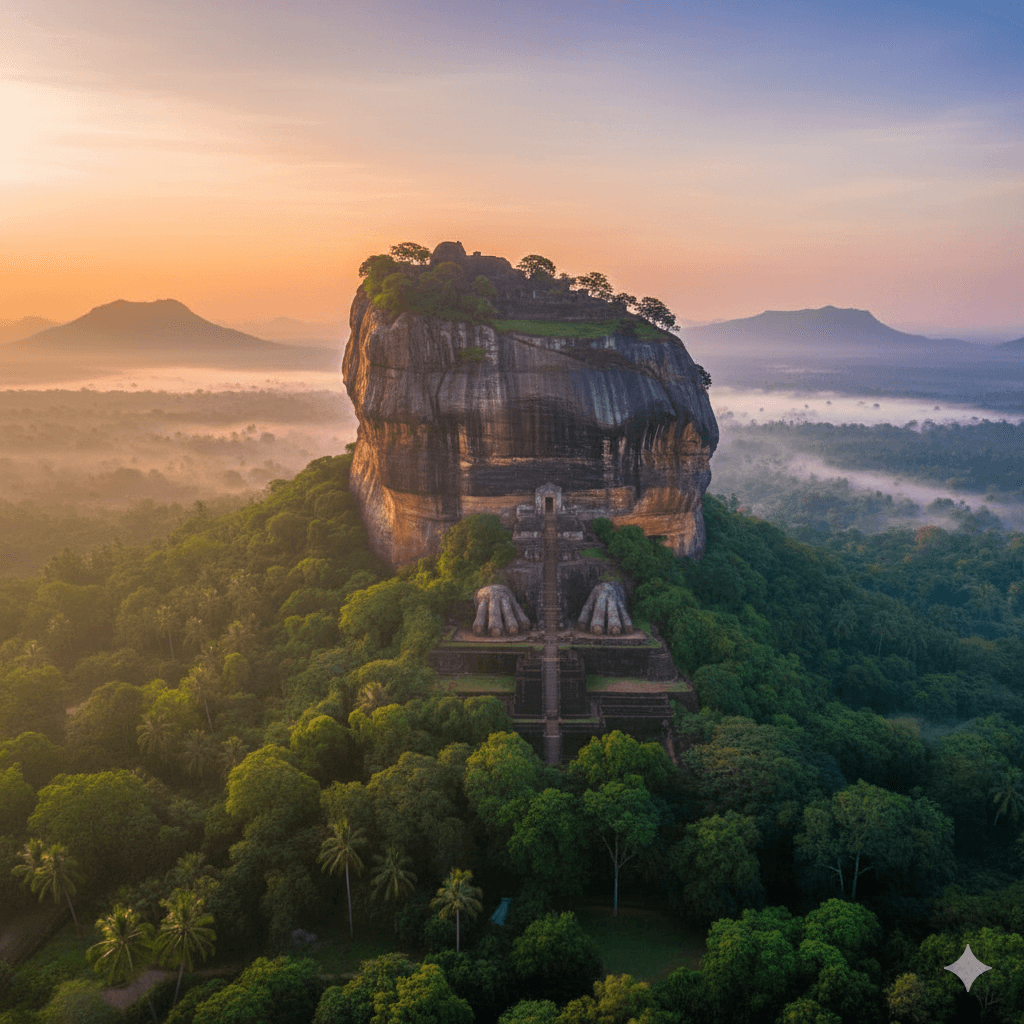
The Palace in the Clouds: Sigiriya, the Lion Rock
Piercing the skyline of Sri Lanka’s cultural triangle, Sigiriya is more than a fortress; it is a drama carved in stone. Known as the 'Lion Rock,' this ancient citadel was built atop a massive 200-meter monolith by a king seeking refuge and glory. From the mysterious celestial maidens painted on its cliff face to the colossal lion paws guarding the summit, Sigiriya offers a breathtaking climb into the past, rewarding travelers with panoramic views and the lingering echoes of a royal legend.
Rising dramatically from the central plains of Sri Lanka, the Sigiriya Rock Fortress is an awe-inspiring testament to ancient ingenuity and ambition. This UNESCO World Heritage site, often referred to as the "Eighth Wonder of the World," is a massive column of rock that once served as the royal citadel of King Kashyapa in the 5th century AD. Its name, meaning "Lion Rock," is derived from the enormous lion whose paws still guard the entrance to the final ascent.
A Tale of Kings, Betrayal, and Genius
The history of Sigiriya is a dramatic saga worthy of a Shakespearean tragedy. King Kashyapa I, having seized the throne from his father in a coup, chose this formidable rock as his capital. Fearing retaliation from his rightful heir brother, he transformed the inhospitable rock into an impregnable fortress-palace.
What he created was an architectural marvel. The summit, comprised of several acres, was crowned with a magnificent palace, complete with gardens, pools, and other structures. The engineering brilliance is evident in the sophisticated hydraulic systems that powered fountains and pools, some of which are still functional today.
The Experience: Art, Architecture, and Adventure
Visiting Sigiriya is a journey through history, art, and nature. The ascent begins through a series of symmetrical water gardens, boulder gardens, and terraced gardens, showcasing ancient urban planning at its finest.
The Frescoes: Halfway up the rock, a spiral staircase leads to a sheltered pocket containing the world-renowned Sigiriya Frescoes. These vibrant paintings depicting celestial nymphs, or "Apsaras," are celebrated for their artistic beauty and are considered some of the oldest surviving examples of ancient Sinhalese art.
- The Mirror Wall: Following the frescoes is the Mirror Wall, a highly polished wall originally so reflective that the king could see his reflection as he walked past. It is now covered with ancient graffiti, verses written by visitors from as early as the 8th century, offering a fascinating glimpse into the past.
- The Lion Gate: A plateau about halfway up leads to the Lion Gate. Two colossal stone lion paws are all that remain of the gigantic lion statue that once flanked the final staircase to the summit.
- The Summit: The climb to the top, involving some steep metal staircases, rewards visitors with breathtaking panoramic views of the surrounding jungle and hills. The ruins of the palace complex, including the royal swimming pool and throne, offer a sense of the grandeur that once existed.
Practical Tips for Travelers
To make the most of your visit to this archaeological wonder, consider these practical tips:
Best Time to Visit: Early morning (around 7:00 AM) or late afternoon (after 3:00 PM) to avoid the heat and crowds.
Tickets: Entrance fees for foreigners are approximately $30 USD. |
Attire: Wear comfortable clothing and sturdy walking shoes suitable for climbing stairs. A hat and sunscreen are essential.
Hydration: Carry plenty of water, as the climb can be strenuous and dehydration is a risk.
Wasps: Be aware of wasp nests on the rock face and follow any instructions from site authorities, especially during wasp season.
Sigiriya is more than just a rock; it is a powerful symbol of ancient Sri Lankan civilization, a blend of natural beauty, artistic endeavor, and engineering prowess that continues to captivate visitors from around the world.